I left the bedside for health tech to fix the tools that fail clinicians — and build ones that make care more humane, for patients, staff, and providers. The same belief I carried on the floor, and the best tools I've ever gotten to build with.
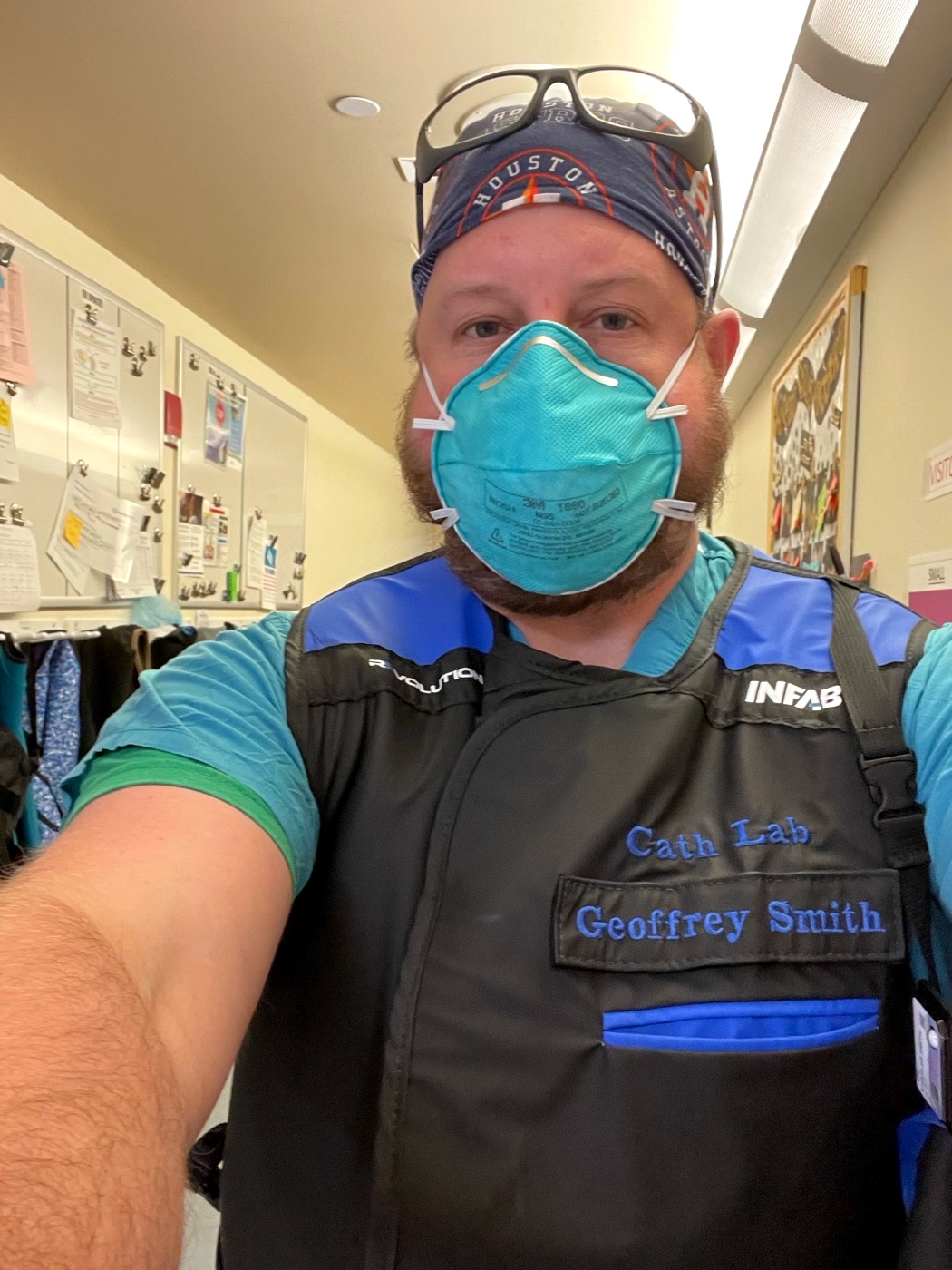
Cardiac cath lab — the people I build for. A rare hire: a clinician who ships production data pipelines — and the translator who turns them into decisions physicians actually act on. Health-tech teams lose weeks in the gap between the clinic and the codebase; I close it. Point me at the friction, and your team ships faster — with the floor already on board.
Most healthcare teams have two groups who don't share a language: the clinicians who live the workflow, and the technologists who build the systems. I've spent fifteen years on the clinical side, so I can stand in the middle and carry meaning both ways.
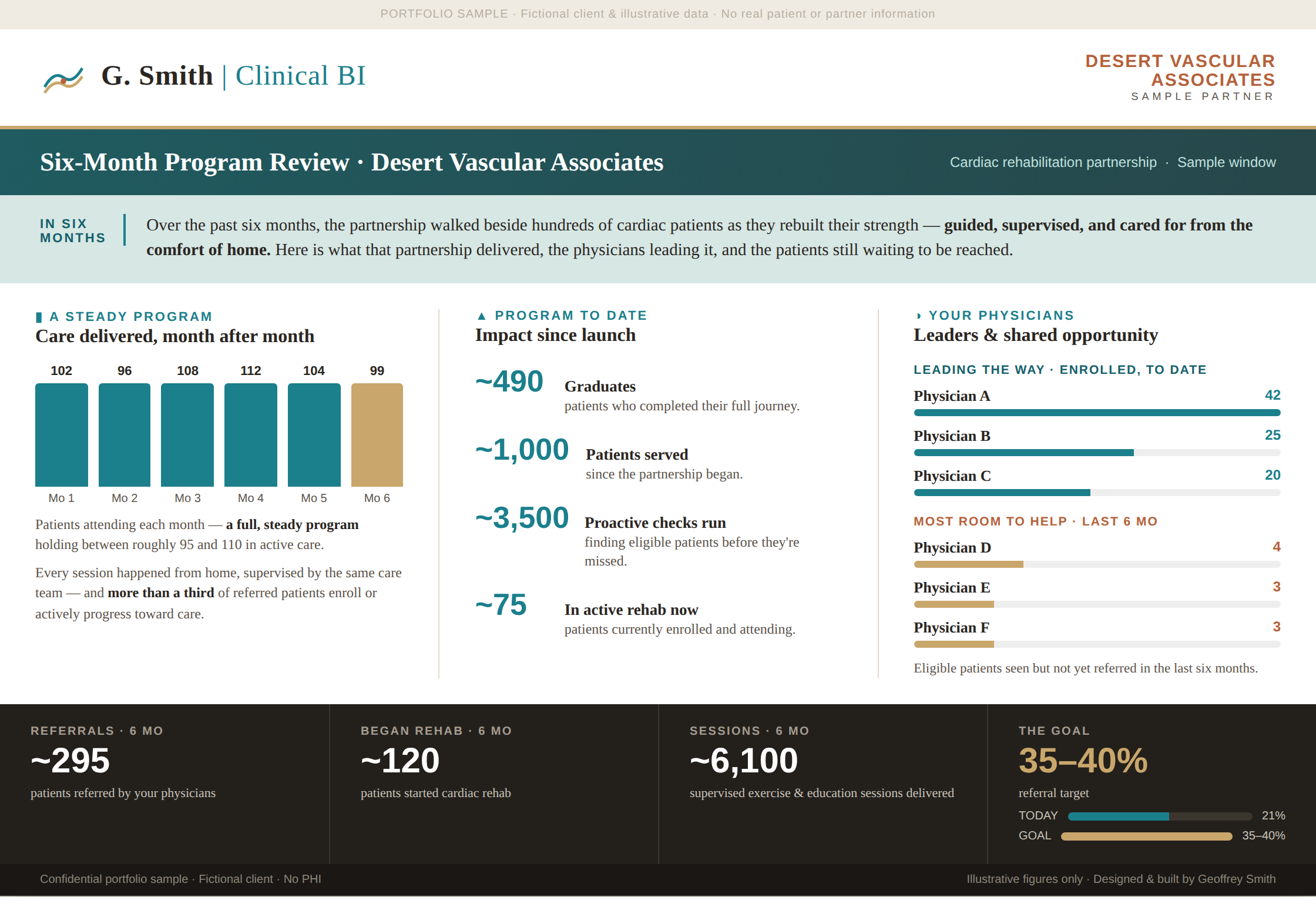
In practice, that means taking the data a clinic already has — appointments, claims, chart exports — and turning it into a single page a physician can read in a minute: which patients to follow up with, and why. Building the chart is the easy part. Making it something a clinician actually uses, mid-shift, is the job.
Six roles across fifteen years — each one a closer read on the clinicians, the workflows, and the data I work with now.
Bedside fluency — learning to read the gap between protocol and the person in the bed.
Resistant staff turned confident adopters; triage time under ten minutes.
3 → 40 clinics in six months — proof the bridge instinct travels across contexts.
Charting friction down, retention up — at the highest volumes.
40% lift in serious-event detection.
72% participation lift; 40% fewer safety events — adoption through trust.
This isn't a plan; it's what I do now. At a virtual cardiac-rehab company, I manage medical-group partnerships, build the dashboards leaders actually use, and wire in AI to cut the busywork — putting fifteen years of knowing how clinicians work to use on the other side of the screen. By choice, not drift.
I build the whole thing end to end: pull the raw data, clean it with rules that flag errors instead of hiding them, match each record to the right provider, and turn it into a finished, shareable report — checked so the numbers hold up.
The report doesn't just show numbers — it tells each physician the one patient to follow up with next, and why. One clear next step per provider, in plain language they can act on between cases.
Real patient data demands care. I keep identifying details out, show only the minimum needed, and design every report so privacy is the default — not an afterthought.
Few turn a warehouse into a humane executive story a cardiologist will act on. Here is one.
The most dangerous minutes of a hospital day are the ones where one nurse hands a patient to another. clinical-llm-evals tests how safely LLMs write that handoff: five clinician-authored cardiac scenarios, a rubric where fabrication is a scored penalty, blinded human scoring, and a clinician-review gate enforced in code.
First published results: my blinded scoring found chart-unsupported claims in 7 of 10 frontier-model handoffs. An LLM judge applying my exact rubric caught 1 of the 7 — the failure mode that matters most clinically is the one automated grading missed.
You've seen the work — and the fifteen years behind it. I'm the bridge between clinical reality and health-tech growth: the person who makes the software land on the floor. If that's the gap your team keeps hitting, let's talk.
Rounds turns your AI into a learning steward — it archives what you're following, synthesizes where it stands, researches every unfamiliar concept into a brief you can trust, and quizzes you on a spaced cycle until it's actually yours. Answer three questions and leave with a working skill. Nothing to install, nothing leaves the page.